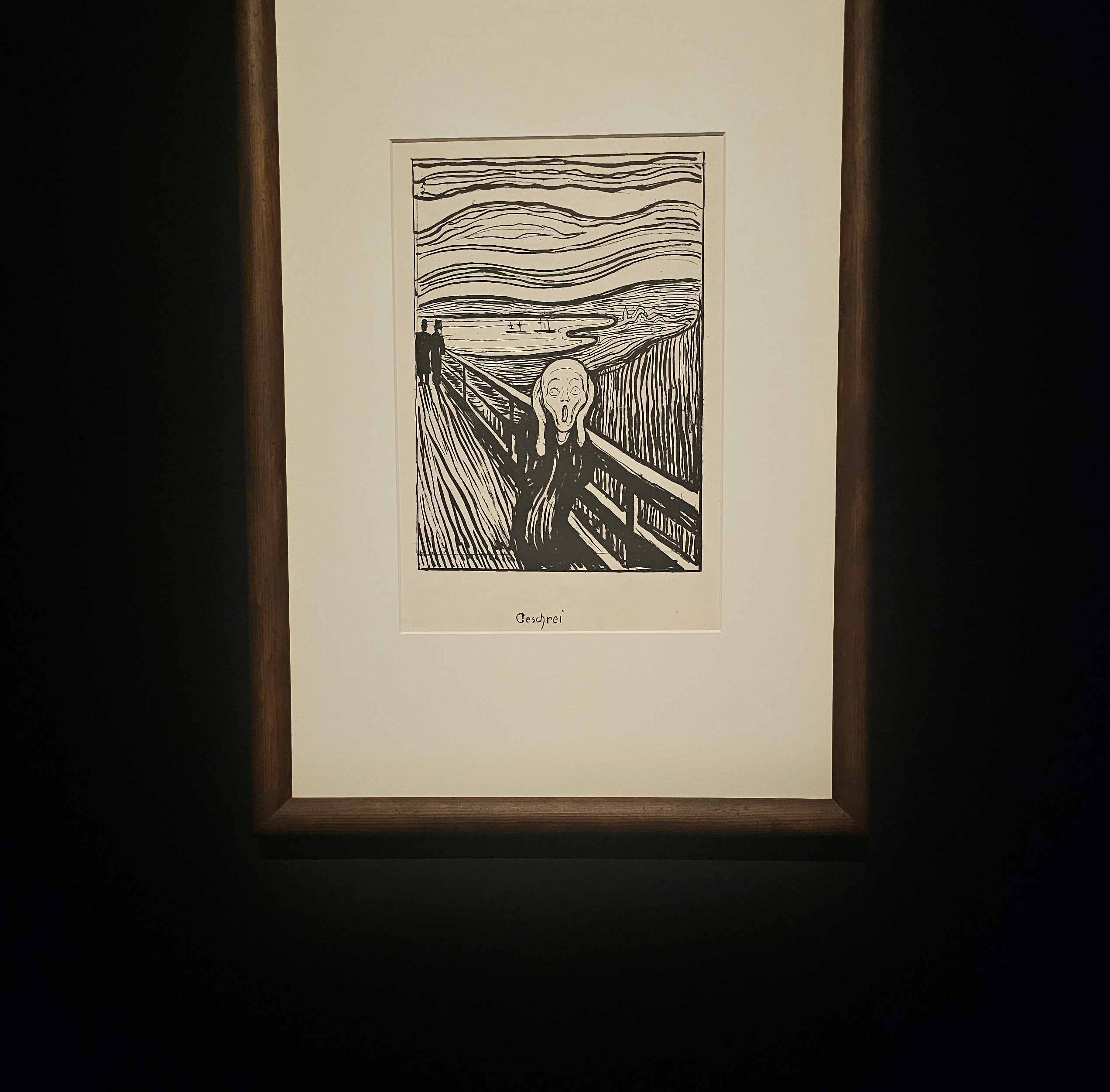
I spent an entire afternoon and early evening at the Munchmuseet in Oslo in late September of this year. Although mainly known by all but experienced art lovers for his lithograph The Scream, Edvard Munch (1863-1944) was a prolific and important artist for his use of color, experimentation with different media, and the psychological aspect of his work. All of which are extremely visible in his oeuvre.
I often felt like posting The Scream, based on my emotions, thoughts, and fears about what is happening to my country, then came the recent 2025 elections, and I was injected with a tiny bit of hope. But make no mistake, it was NOT the Democratic party that won, it was the people! Each candidate that won ran an election focused on the specific issues of their constituencies, from beating a sheriff who cooperated with ICE, to mayor of New York, who understood that city’s problems, and, clearly wasn’t a good ole’ (aged) boy who’s been around the block once too often. But back to Munch!

The Scream is actually based on a personal experiece. He was walking with two friends at sunset in the countryside, when the sun became blood red as it prepared to set. He was filled with anxiety, turned from his friends (you can see them walking on in the distance), and felt all of nature, the sky and earth, were engaged in a huge scream, which he sensed he must join in. The artists’s rendition of this started with a painting in 1893. In 1895 with the assistance and knowledge of Alexander Liebman, he made about 30 lithographs, of which 20 survive. The one pictured above is the most common one seen. In at least one of the prints, there is written in German at the bottom, “I felt a large scream pass through nature.” Notice in the one in color, the undulating lines of the natural world and Munch, himself, possibly indicating the panic and the need to scream by the natural world and himself. It is different than the lithograph, which has its own harshness built into it. Munch often reworked images to experiment with not only different media, but feelings.
He was a Modernist in the sense that he broke with tradition and definitely worked in a variety of forms including new ones like photography, but also new approaches to old ones, such as woodcuts. He was also an Expressionist, obviously, with The Scream being an excellent example, but take a look at the anguish in this horse.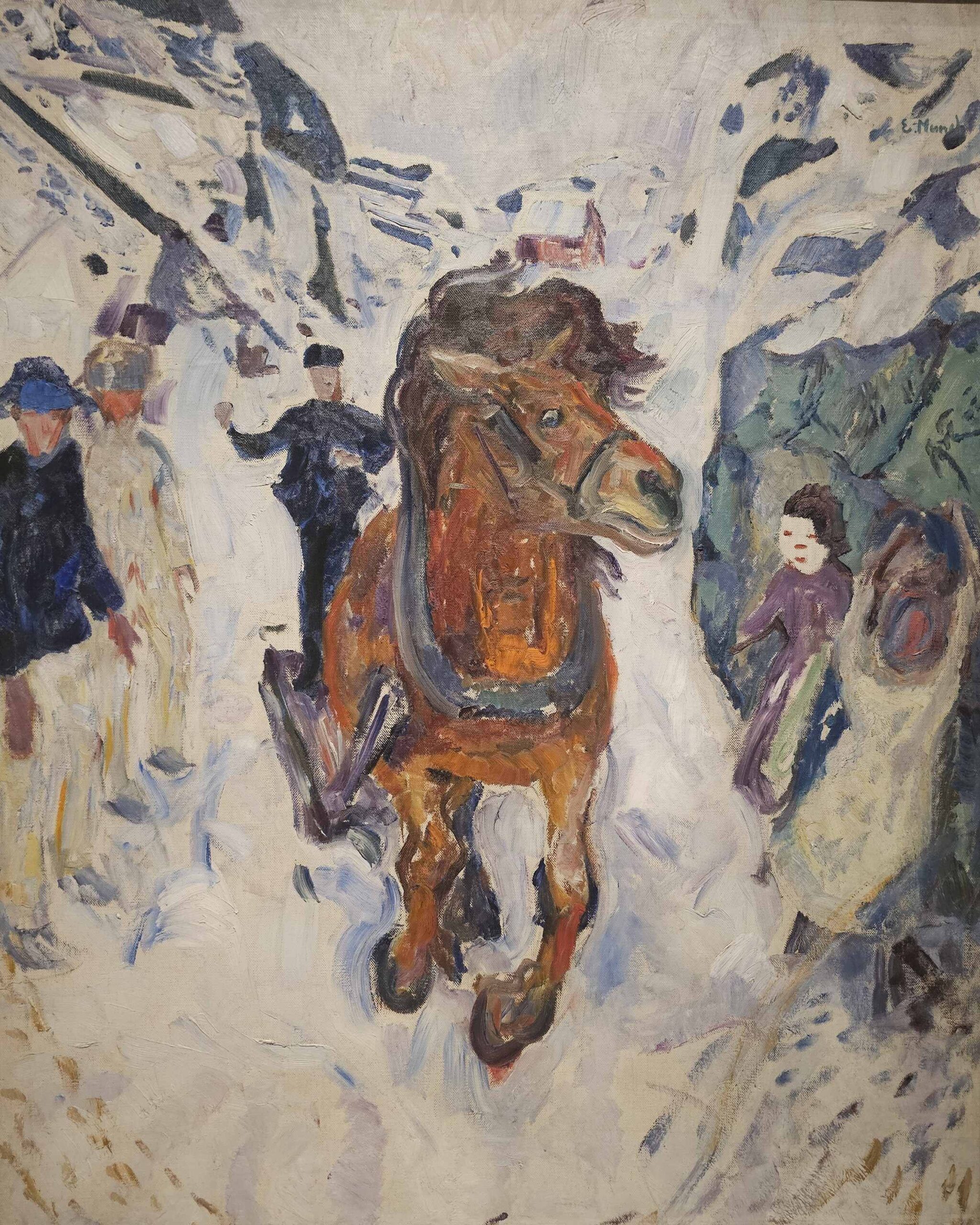
Notice the faceless people, only the terrified horse shows any emotion here.
His preoccupation with death is not surprising. His mother died when he was only 5, his sister when she was 15, and he was 14, both of TB. He lived through WWI, although Norway was neutral, and even though Norway declared neutrality in WWII, Nazi Germany attacked anyway and occupied Norway from 1940 to 1945 in a particularly harsh and brutal manner. Munch died before the end of the war, but was well aware of what was happening to his fellow Norwegians. As well, he endured various illnesses as a child and was described as ‘sickly.’
Nor was his preoccupation with emotional themes, including anxiety, depression, and isolation. Because of his illnesses, he was often bedridden and could not attend school, but was educated at home, certainly influencing his sense of isolation. His father exhibited what we would probably label mental illness today in some form of depression. Other influences were his first love affair, which was with a married woman, his participation with the Kristiania (as Oslo was originally called) Bohemians, 2 separate sojourns in Paris, thanks to scholarships, the first for just 3 weeks, the second for 1 year, during which time he runs out of money, his father dies suddenly, while Munch lived in the cliché of an artist’s Parisian apartment (it really was small, cold, and damp) and started to form his artistic development as expressing the existential elemental human soul. A later love affair with Mathilde ‘Tully’ Larsen ended dramatically during an argument with a shot fired from his own gun into his left hand, a situation that preyed on him.
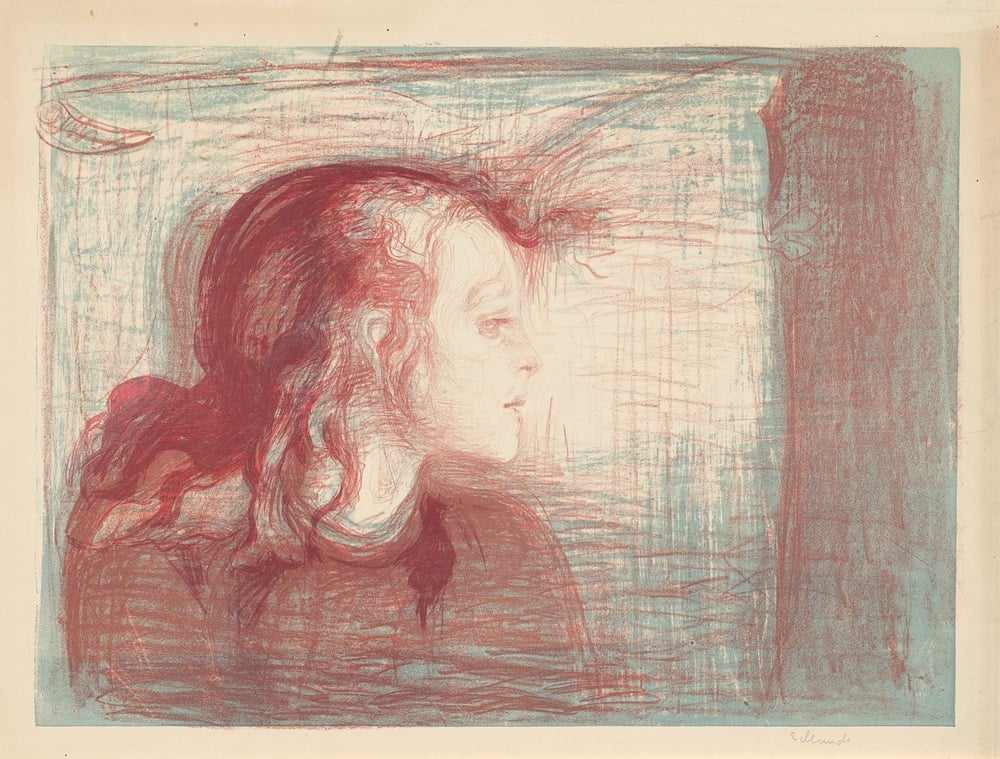
At 17, he wrote in his diary, “It is my decision now to become a painter.” After his mother’s death, his Aunt Karen moved in to care for the household. She encouraged his artwork, and he attended the Royal School of Art and Design in Kristiania. His father was a military doctor, and Edvard sometimes accompanied him on his calls. becoming even more familiar with illness, anatomy, and death. His brother studied to be a doctor, often sharing with Edvard his anatomy lessons. His brother died just before his final ‘certification’ as a doctor. As with the Kristiania Artists’ Autumn Exhibition in 1886 when he was 23 with a painting he later calls The Sick Child (below), and, understandably, often a common theme, his paintings in the 1892 Association of Berlin Artists are criticized as much as they are praised. He was breaking barriers in art and was not always appreciated, nor even understood.
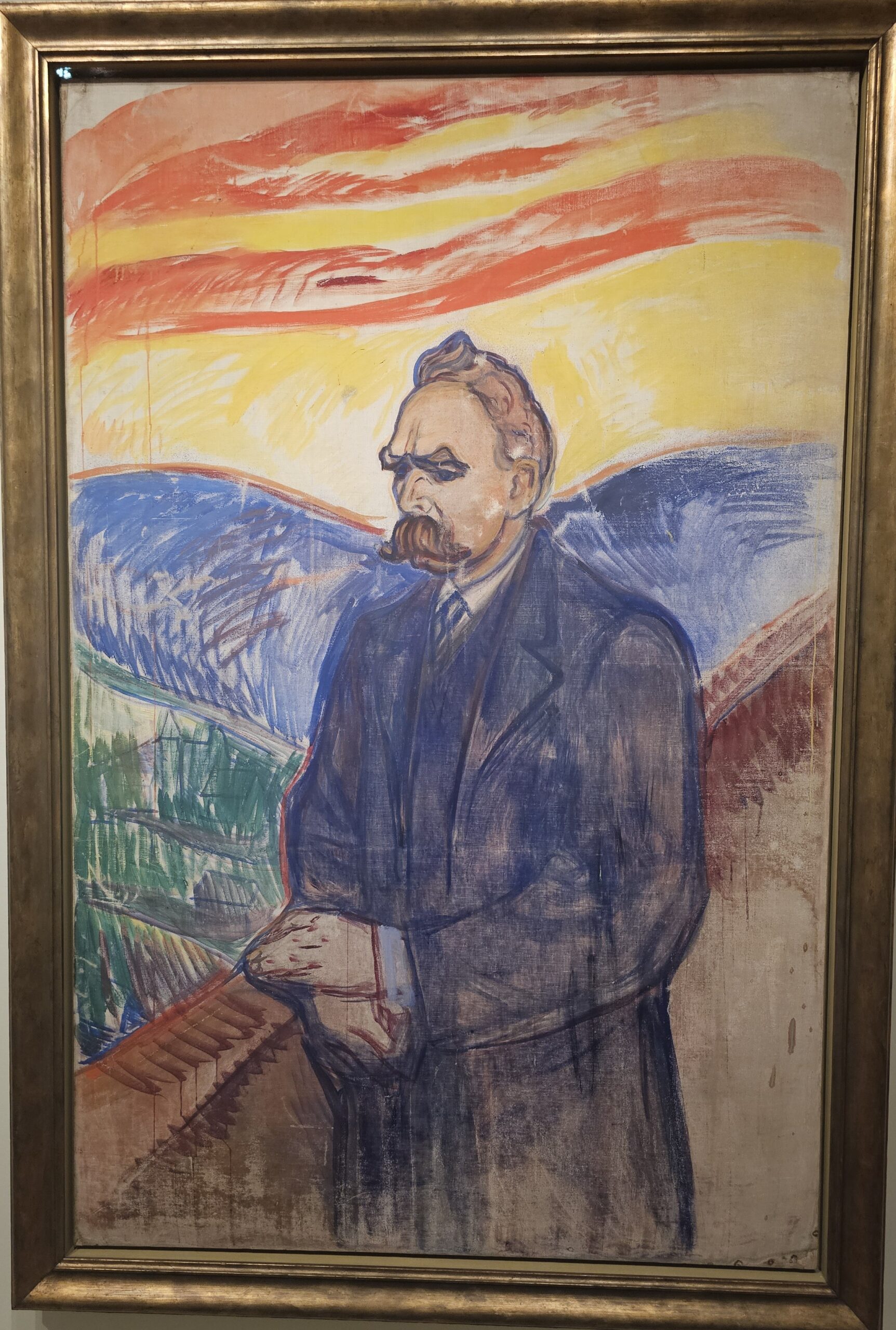
Even this portrait of Nietzche to the left shows considerable emotion in his face, which is clearly the central element of the painting.
As he had in Kristiania and Paris, during the 4 years he lived in Berlin he associated with intellectuals and socio-political radicals of the times, whose get togethers often involved excessive drinking. In 1908 he had a nervous breakdown involving alcoholism, depression, and anxiety. He committed himself to a sanitarium in Copenhagen. He exited there a more confident, positive artist ready to continue work.
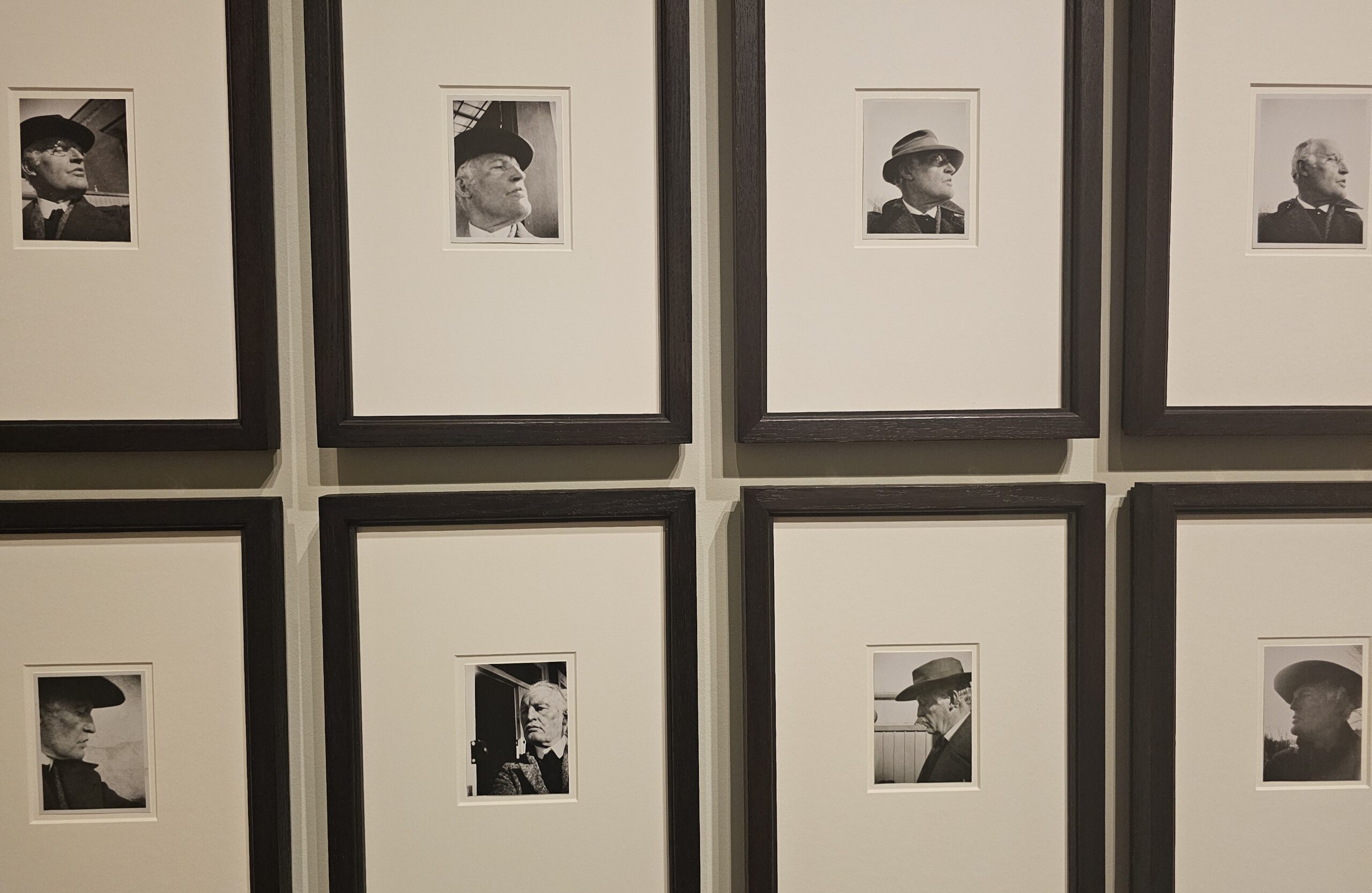
As I mentioned above, he often experimented with various art media, and was fascinated with cameras and film, which were developed during his adult years. In the photographs below he took photos of his head at different angles and with various light and shadows. These were not narcissistic ‘selfies,’ but experiments with a new art form to learn about it.
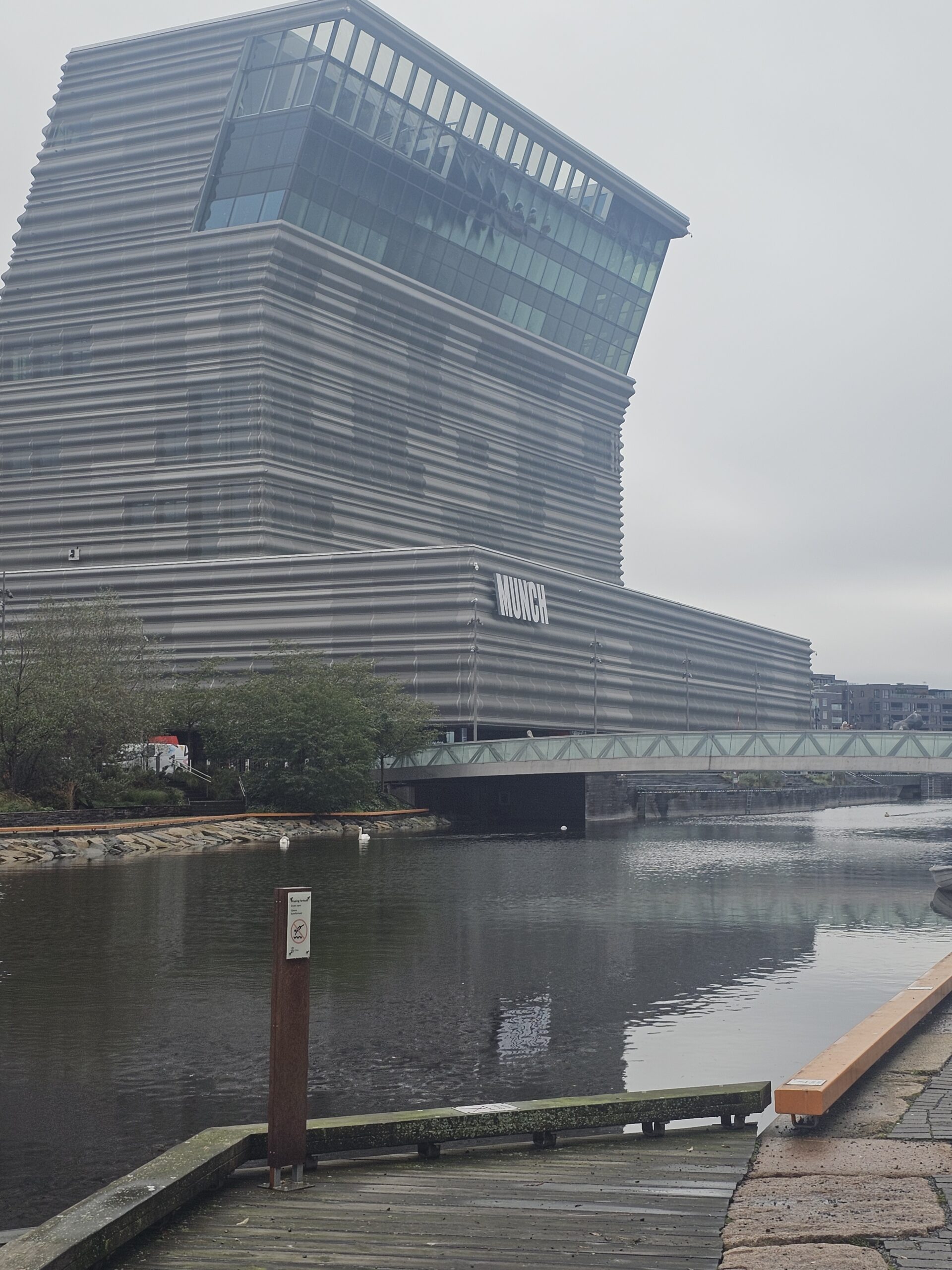
This is the Munchmuseet; no it wasn’t just the result of weakened posts and beams, nor an earthquake. I think Munch would have liked it. The view from the upper floor over the harbor and parts of the city is marvelous.
All the photographs were permitted to be taken by the author at the Musee, as may other attendees, but they must not be copied or used in any other manner.
This was so fascinating! I never knew anything beyond “The Scream”. Thanks for sharing.
A wonderful and enlightening article about the artist, his work and his life.
Thank you Doann.